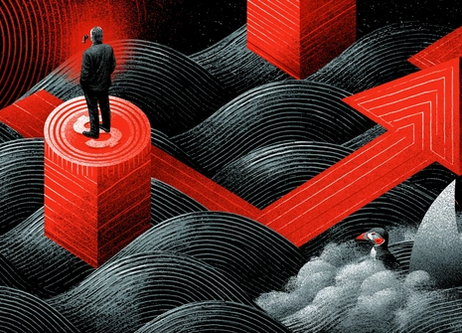
Creative Projects Involve More Decision-Makers Than Ever — And That Changes Everything

Legal, procurement, compliance, data privacy, DEI, executive leadership — the circle of people who weigh in on creative work has expanded steadily for a decade. The number of stakeholders on a campaign didn't grow because organizations became more collaborative. It grew because the risk surface of creative work expanded. And most production workflows were never designed for the volume of feedback that now hits them.
- The average B2B decision now involves 10 to 13 stakeholders across multiple departments
- 86% of B2B purchases stall during the buying process, primarily due to internal disagreements
- Creative production faces the same inflation — more reviewers, longer cycles, slower time-to-market
Think about the last campaign your team shipped. Count the people who had to approve it before it went live. Not the people who created it — the people who reviewed it, annotated it, flagged concerns, requested changes, or simply had to say "yes" before the next person could say "yes."
Ten years ago, that number was probably three to five. A creative director, a brand manager, a client-side marketing lead. Today it's eight, ten, twelve — and climbing. Legal needs to check claims. Compliance needs to verify disclosures. Procurement needs to confirm licensing. Data privacy needs to review tracking pixels. DEI reviews imagery and language. Executive leadership wants final sign-off because the last campaign that went viral did so for the wrong reasons.
Each of those additions was individually rational. Collectively, they've transformed creative production from a workflow with a clear approval path into a negotiation among competing priorities — and most teams are running that negotiation on tools built for three reviewers, not thirteen.
The Stakeholder Inflation Is Real, Measurable, and Accelerating
The B2B buying world has tracked this phenomenon precisely. In 2017, Harvard Business Review reported that the average B2B purchase involved 6.8 decision-makers. By 2023, Gartner put the number at 8 to 13, depending on company size. Forrester's 2024 data shows 13 stakeholders on average, with 89% of decisions crossing multiple departments. Younger decision-makers make it worse: buyers under 40 involve nearly twice as many stakeholders as those over 55.
Creative production follows the same structural pattern. The number of people who must review, approve, or sign off on campaign assets has grown in lockstep with the risk surface those assets carry. A social media post in 2016 needed a copywriter, a designer, and a manager. A social media post in 2026 may need all three, plus legal review for AI-generated content disclosures, compliance check for market-specific regulations, brand safety review for platform adjacency, accessibility audit, and executive approval if the topic is remotely sensitive.
This isn't bloat. Each reviewer represents a real risk that the organization has decided it can't afford to ignore. But the cumulative effect is a validation paradox: every additional checkpoint designed to reduce risk also increases cycle time, and increased cycle time creates its own risks — missed market windows, stale messaging, competitor advantage.
What Happens When Twelve People Review a Campaign
More reviewers doesn't mean better work. It means different work. The dynamics change in ways that most Creative Ops leaders underestimate.
The first shift is toward consensus, away from conviction. When three people approve a campaign, one strong creative vision can carry the room. When twelve people approve it, the asset must survive twelve sets of objections. The path of least resistance is to sand down every edge — remove the bold claim that legal flagged, soften the visual that DEI questioned, pull the statistic that compliance couldn't source in time. What ships is often the version that nobody objected to, rather than the version that anyone championed. Gartner's research confirms this pattern in B2B buying: 74% of buying teams experience what they call "unhealthy conflict" — disagreement that degrades rather than improves the outcome. The question of what role creativity actually plays in a structured, multi-stakeholder environment has never been more urgent.
The second shift is serial delay. In most organizations, review isn't parallel. It's sequential. The asset goes from creative director to brand manager to legal to compliance to executive. Each reviewer waits for the previous one to finish. Each round of feedback triggers a revision. Each revision restarts the queue. A five-day review cycle per reviewer, multiplied by six reviewers, means thirty days of review time for work that took five days to produce. And that assumes no reviewer sends it back for a second pass.
The third shift is feedback fragmentation. Twelve reviewers produce twelve sets of feedback, often contradictory. Legal wants a disclaimer added. Brand wants the copy shortened. The executive wants the hero image changed. The DEI reviewer flags language that the copywriter chose specifically for audience resonance. The producer must synthesize these inputs into a coherent revision — without a clear hierarchy of whose feedback takes precedence. The result, more often than not, is a bottleneck that nobody planned for and that no retrospective can fix after the fact.
The Time-to-Market Tax Is Compounding
Every additional reviewer adds time. And time, in creative production, has a direct revenue cost.
Consider a product launch campaign with a 90-day production timeline. If approval cycles expand from two weeks to five weeks due to stakeholder inflation, you've consumed a third of your entire timeline in review. The creative work — the actual making — gets compressed into whatever's left. Teams ship faster but think less. Quality drops not because talent declined, but because the window for craft shrank.
Research consistently shows that brands reducing time-to-market by 25% see measurable revenue impact. The inverse is equally true: every week of delay represents market exposure that a competitor captures. And the delay isn't caused by the creative team being slow. It's caused by the approval architecture being designed for a different era.
The organizations that still run approvals through email threads, shared drive comments, and Slack messages are the ones most exposed. These tools were never built for structured, multi-stakeholder review. Feedback gets lost. Version confusion multiplies. The person who approved V3 doesn't realize V5 exists. The person who flagged a legal issue in a reply-all doesn't know whether it was addressed. When review links replace email and bring every stakeholder into one governed environment, organizations consistently see validation cycles drop by 50–75%. The coordination overhead that eats most project timelines isn't a people problem. It's an infrastructure problem.
The Answer Isn't Fewer Stakeholders — It's Better Architecture
Removing reviewers isn't realistic. The risks that brought legal, compliance, and data privacy into the approval chain haven't disappeared. If anything, they've intensified — the EU AI Act, platform-specific content policies, accessibility regulations, and brand safety in programmatic environments all demand specialized review that didn't exist five years ago.
The answer is changing how those reviewers participate. Three structural shifts make the difference.
First, parallel review instead of sequential. When every reviewer can see the asset simultaneously, annotate it in context, and flag issues in real time, the total review time collapses from the sum of individual cycles to the duration of the longest one. A twelve-person review that takes thirty days sequentially can take five days in parallel — if the infrastructure supports it. Collaborative annotation is what makes parallel review possible: everyone marks up the same version, in the same place, at the same time.
Second, structured feedback with clear hierarchy. When feedback is captured in a system that distinguishes between a legal requirement (must fix), a brand preference (should fix), and a personal opinion (consider), the producer can triage revisions without a meeting. The tool does the work that a project manager used to do in a conference room: making visible which feedback is mandatory and which is optional. This is why defining roles and responsibilities before a project begins matters more than ever — without bounded scopes, every reviewer has an implicit veto.
Third, version comparison that eliminates confusion. When stakeholders can see V3 and V5 side by side — with annotations showing exactly what changed and why — the review conversation moves from "what did we change?" to "is this change correct?" That shift saves hours per review cycle and eliminates the single most common source of approval delay: someone reviewing an outdated version.
Master The Monster was built for exactly this reality: a creative project management platform where review links, multi-format annotation, side-by-side versioning, and structured approval workflows handle the complexity that twelve stakeholders create. When L'Oréal Paris runs a campaign through review with multiple markets, legal teams, and brand directors weighing in simultaneously, the platform ensures that every piece of feedback is traceable, every version is comparable, and every approval is documented — without the version chaos that email-based review inevitably produces.
The stakeholder circle isn't going to shrink. The only variable is whether your production infrastructure can absorb the complexity without converting every additional reviewer into an additional week of delay.
The Operating Model Shift Nobody Talks About
Here's the deeper implication that most organizations haven't confronted. Stakeholder inflation doesn't just slow down creative production. It changes what "creative direction" means.
When three people approved a campaign, the creative director had genuine authority. The work reflected a point of view. When twelve people approve a campaign, authority is distributed — and distributed authority defaults to risk avoidance. The work reflects the absence of objections, not the presence of vision.
This is why the most distinctive brands in the market are also the ones with the most disciplined approval architecture. They haven't reduced the number of stakeholders. They've given each stakeholder a defined role, a bounded scope of feedback, and a system that makes their contribution visible without giving everyone a veto. The creative director still drives the vision. Legal still protects the organization. But they do it within a structure that preserves speed and clarity rather than sacrificing both. Organizations that set internal guidelines for content validation before the review cycle begins consistently ship faster and stronger than those that improvise governance on every project.
The choice facing every Creative Ops leader is straightforward: absorb the growing stakeholder circle into an infrastructure designed for it, or watch every campaign get a little slower, a little safer, and a little less distinctive — until the brand becomes indistinguishable from everyone else's consensus-driven output.
FAQ
Why are there so many more stakeholders on creative projects now? The risk surface of creative work has expanded dramatically. AI-generated content requires transparency disclosures. Data privacy regulations demand tracking review. Accessibility standards apply to digital assets. Brand safety concerns have escalated with programmatic distribution. Each risk added a reviewer — and collectively they've doubled or tripled the approval circle.
Does more review actually improve creative quality? Not automatically. Gartner found that 74% of multi-stakeholder buying teams experience unhealthy conflict that degrades outcomes. The same dynamic applies to creative review: more feedback without clear hierarchy produces consensus-driven work that satisfies nobody rather than vision-driven work that connects with audiences.
What's the single biggest change that speeds up multi-stakeholder review? Moving from sequential to parallel review. When twelve reviewers each take five days in sequence, that's sixty days. In parallel, it's five. The infrastructure requirement is a shared review environment where everyone sees the same version, feedback is captured in context, and approvals are tracked in one place.
How do you maintain creative quality with so many reviewers? Define each stakeholder's scope before review begins. Legal reviews claims and disclosures. Compliance reviews regulatory requirements. Brand reviews tone and identity. The creative director retains authority over the creative vision. When roles are bounded, feedback becomes additive rather than dilutive.
Sources
Gartner — B2B Buying: How Complex Solutions Are Purchased (2023–2025): https://www.gartner.com/en/sales/insights/b2b-buying-journey
Forrester — The State of Business Buying, 2024 Report: https://www.forrester.com/report/the-state-of-business-buying-2024/
Harvard Business Review — The New Sales Imperative: B2B Buying Committees (2017): https://hbr.org/2017/03/the-new-sales-imperative
6Sense — B2B Buying Behavior Research (2025): https://6sense.com/resources/research
Demandbase — Buying Group Dynamics (2025): https://www.demandbase.com/resources/
Sopro — 68 B2B Buyer Statistics for 2025: https://sopro.io/resources/blog/b2b-buyer-statistics-and-insights/